The argument
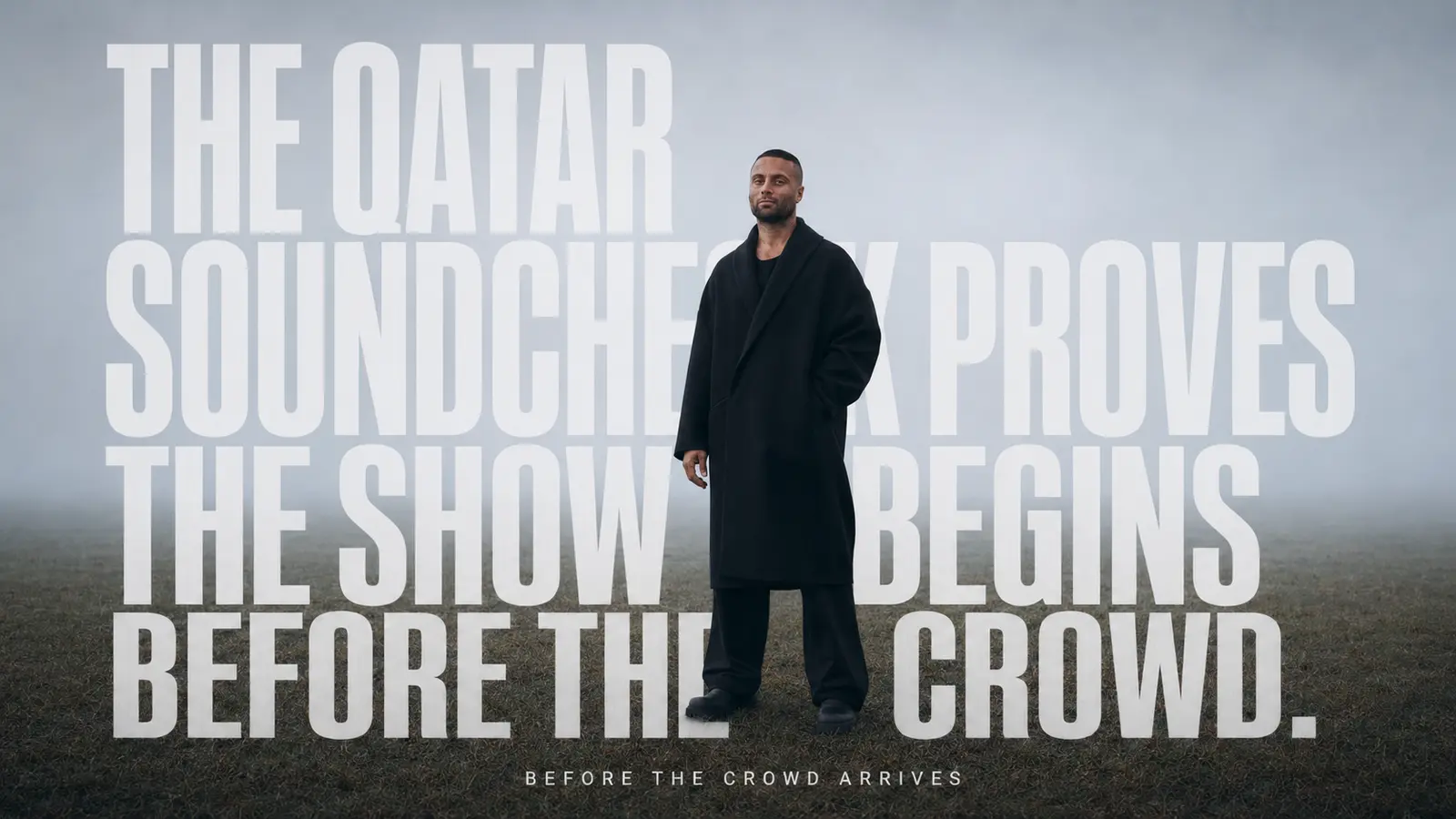
The crowd sees the strike. The artist feels everything that had to happen before it: the room measured, the monitors corrected, the body warmed and the timing tested against a space that is still mostly empty. Paul Lizzi’s official Qatar archive does not hide that stage of the work. It names the clip for what it is—a drum solo during the Qatar Asia Cup soundcheck.
That creates today’s argument: live music becomes believable long before applause arrives. The concert may be the public proof, but soundcheck is where confidence has to exist without the crowd returning any energy.
The world signal: doors are not the beginning
Red Rocks Amphitheatre’s official event page lists “Sarah McLachlan” with Allison Russell for Tuesday, July 28, 2026. The page records a 7:30 p.m. start, 6 p.m. doors and American Sign Language interpretation available on request. Those are verified details from the venue; they do not imply any collaboration or connection with Paul.
The editorial connection is the invisible structure around a live night. A famous venue, an announced start time and an accessibility plan all depend on decisions made before listeners enter. The stage does not switch from empty to meaningful at 7:30. It becomes ready through preparation.
Inside the video
The exact official title is “PAUL LIZZI in Qatar Drum Solo | Karl Wolf | Jay Sean | QATAR ASIA CUP Soundcheck.” Published January 8, 2011 on Paul’s official YouTube account, it belongs to the Drummer Foundation era. The metadata verifies two essential facts: this is a Paul Lizzi drum-solo document, and it was recorded in the soundcheck context of the Qatar Asia Cup.
The title also names Karl Wolf and Jay Sean. That credit is preserved as official archive metadata; this Volume does not extend it into an undocumented performance story. What matters here is the honest frame: instrument first, rehearsal conditions visible in the record and no need to pretend the preparation was the finished show.
What the empty room reveals
Soundcheck removes the easiest disguise in live music. There is no packed room to amplify a gesture and no applause to turn a rough edge into momentum. A drummer has to build time against the room itself. That is why this small archive clip carries weight beyond its date: it preserves Paul’s rhythm-led identity while it was still being tested in international spaces.
The Qatar document also sharpens the meaning of the classics. Drum Luvin’ placed the kit in front of the image instead of hiding it behind a singer. M.O.T.H. pushed that identity toward a complete artist world. The soundcheck sits between those ideas as evidence that the performance foundation was physical before it became mythology.
Listen / watch next
Watch the Qatar soundcheck first, then move to Drum Luvin’ and the official M.O.T.H. video. The sequence is clean: live discipline, drums as the visual hook, then Man of the Hour widening the frame. These are not museum pieces. They explain why the current music still hits with a performer’s sense of timing.
Then return to WEN LAMBO and the current Z11VFY chapter. The surfaces are different, but the instinct survives: enter with control, leave the rhythm visible and make the image answer to the music.
From Paul Lizzi to Z11VFY
Paul Lizzi began with the body keeping time. LIZZIFY turned the process into an archive. Z11VFY now carries that history without dressing it as nostalgia. The newest chapter can be colder, stranger and more cinematic because the foundation underneath it was tested before the room filled.
That line runs through MultiVerse, Vici, First$$$, Oscura and Z11VFY. Five albums changed the scale of the world, but not the central rule preserved in Qatar: the show starts when the artist is ready, not when the audience arrives.