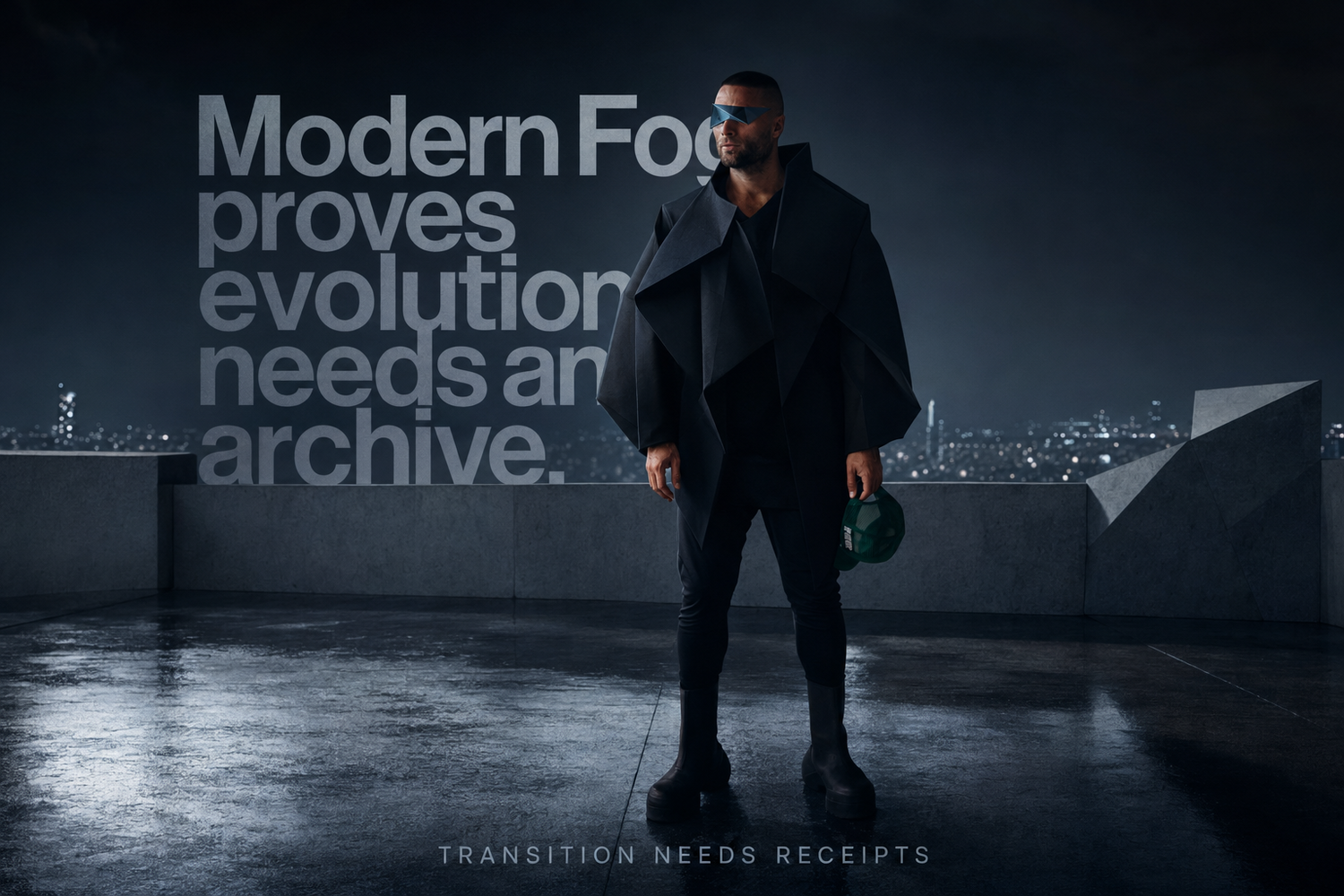
The argument
Artists love the clean reveal: new name, new image, finished record. “LIZZIFY | 14 | MODERN_FOG |” preserves the opposite. Paul Lizzi published the official episode on June 13, 2011, while the separation between his public persona, relationship and solo direction was still unresolved.
That creates the day’s argument: reinvention becomes believable when the artist preserves the version that did not yet know what it would become. Modern Fog matters because it does not pretend Z11VFY was inevitable. It shows Paul working inside uncertainty before the five-album arc had a final name.
The world signal: expression needs evidence
On July 24, Spotify Newsroom published “Spotify Honors The White House Correspondents’ Association and Freedom of Expression.” The company described a reception recognizing journalists, creators and the right to share perspectives, then said it continues investing in artists, authors, creators and journalists who build audiences on its platform.
That is verified corporate context, not evidence of a connection between Spotify’s event and Paul. The honest bridge is narrower: expression survives when somebody records it and lets it remain attributable. A platform can amplify a voice. Modern Fog shows the artist doing the earlier work—making a personal transition visible enough to enter an archive.
Inside the video
Modern Fog is a 204-second entry from the LIZZIFY Prologue era. Its official description credits Gin & Tea as director and Paul Lizzi as co-director, calls the series a video diary and frames this chapter as a continuation of M.O.T.H. It explicitly documents Paul moving toward a solo life and career.
The public auto-generated transcript confirms the structure. The episode moves through the recurring Man of the Hour performance before closing with spoken reflection about losing yourself in a moment, time appearing to stop and opening your eyes to someone’s absence. Performance and private narration occupy the same tape instead of being separated into product and explanation.
The middle is the work
A polished biography makes change look logical after the fact. Modern Fog keeps the contradiction intact: confidence in the performance, instability in the narration, ambition in the production and uncertainty in the life around it. The camera does not solve those tensions. It gives them a date.
That timestamp is creative infrastructure. Without it, M.O.T.H. could sit in the catalogue as an isolated song. With it, the track becomes part of a documented decision to go solo and keep moving. The archive does not merely prove that content existed; it reveals why the next version of the artist had to arrive.
Listen / watch next
Watch Modern Fog first, then return to the official M.O.T.H. video. The diary supplies the emotional and career transition; the music video supplies the image that transition was breaking away from. Together they show the difference between performing certainty and actually living through change.
Then move to Strangers and WEN LAMBO in the current Z11VFY chapter. Those newer tapes are leaner and more direct, but the instinct is familiar: document the encounter, leave the process visible and let the identity form in public without pretending every answer arrived at once.
From Paul Lizzi to Z11VFY
Modern Fog predates MultiVerse, yet it already contains the method that carried Paul through MultiVerse, Vici, First$$$, Oscura and Z11VFY: use the song, the camera and the unfinished moment as parts of one record. LIZZIFY was not decoration around the music. It was the mechanism that kept the transformation legible.
The current Z11VFY era does not erase that fog. It proves the fog had direction. Strangers is the freshest verified tape, WEN LAMBO remains the first signal from the current album, and the five-record journey now has fifteen years of visual receipts behind it. Evolution is stronger when the archive refuses to clean it up.