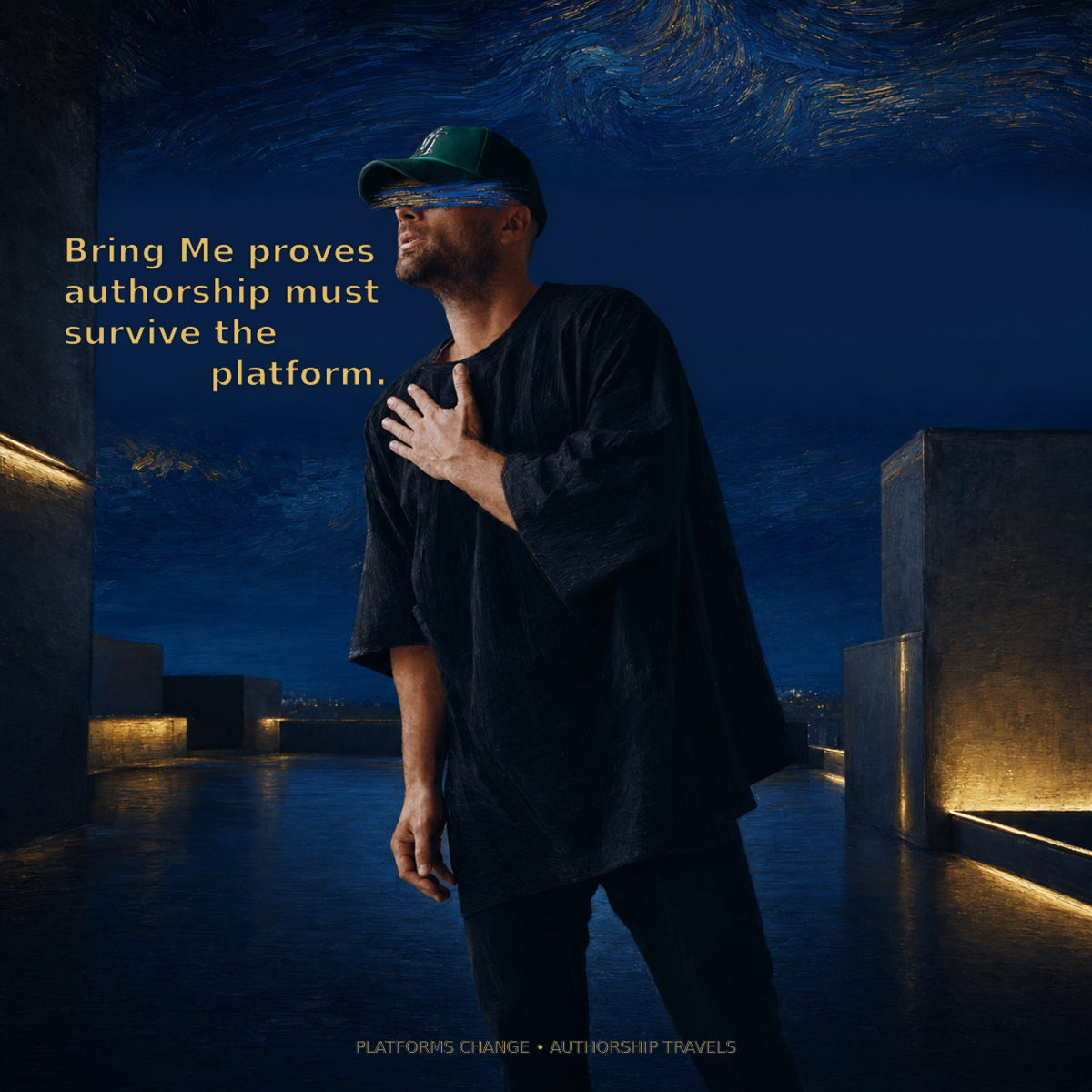
The argument
A music platform can look permanent right until it is not. Paul Lizzi’s official Bring Me video offers a sharper kind of permanence: the public page names the performers, the project and the person responsible for the idea, direction and edit. Those details are not administrative dust. They are the map back to the work.
That creates today’s argument: a platform can disappear, but authorship has to travel with the music. The song matters first. Yet when the interface changes, the credits are what stop a release from becoming a detached file with no creative history behind it.
The world signal: preservation needs an exit
On July 22, SoundCloud Newsroom published “SoundCloud Acquires Nina Protocol to Preserve and Amplify Independent Music Culture.” SoundCloud says Nina decided to wind down its platform; the acquisition includes Nina’s editorial archive and genre map, plus a migration path intended to let artists and users bring music, content, followers and creative work into SoundCloud.
That is verified corporate context, not evidence of a relationship between SoundCloud, Nina and Paul. The honest connection is the exit problem. Independent artists build meaning across pages they do not own forever. A transfer can preserve files. It only preserves culture when the names, credits, context and routes back to the creators move too.
Inside the video
The official title is “PΛUL░LIZZI 》【BRING ME】♥ 》 ft. @EliseGabrielle.” Paul published the 125-second video on February 24, 2023, in the Open / First$$$ era. Its title and description identify Elise Gabrielle as the featured performer and place the track on First$$$.
The same public description verifies the creative chain: “Directed & Edited by Paul Lizzi” and “Based on an original idea by Paul Lizzi.” Those are the content details this Volume can responsibly use. No lyric, scene or meaning needs to be invented. The page already shows that Paul treated image, performance and authorship as one release.
Credits are part of the sound
BRING ME is a useful archive choice because its metadata refuses the anonymous version of independence. Paul is not only the name in front of the track. He is documented as the person shaping the video’s underlying idea and final edit, with Elise Gabrielle clearly identified beside him. That turns one upload into a small, legible creative system.
Portable authorship does not mean freezing art in one era. It means preserving enough context for change to remain intelligible. First$$$ can sound and look different from MultiVerse or Vici without becoming disconnected from them. The credit trail lets the work mutate while the source stays visible.
Listen / watch next
Watch BRING ME first, then move to the official 2023 Gain archive post. Its description documents Paul finally holding the song after a struggle over where it would go. The situations are different, but the tension is shared: independent work becomes stronger when the artist can keep the music and its story attached.
Then open the complete catalogue. MultiVerse establishes the first recorded chapter; Vici widens the frame; First$$$ carries BRING ME; Oscura darkens the language; Z11VFY turns that accumulated history into the current signal. The path matters because every chapter remains attributable.
From Paul Lizzi to Z11VFY
Paul Lizzi becoming LIZZIFY and then Z11VFY is not a platform migration. It is an authored evolution across sound, film and identity. The names change because the work changes. The receipts make that evolution coherent instead of convenient.
Strangers remains the freshest verified Z11VFY tape, and WEN LAMBO still opens the current album’s signal. BRING ME sits earlier in the five-album journey—MultiVerse, Vici, First$$$, Oscura and Z11VFY—but its lesson is current: when the container changes, carry the song, the collaborators and the authorship forward together.